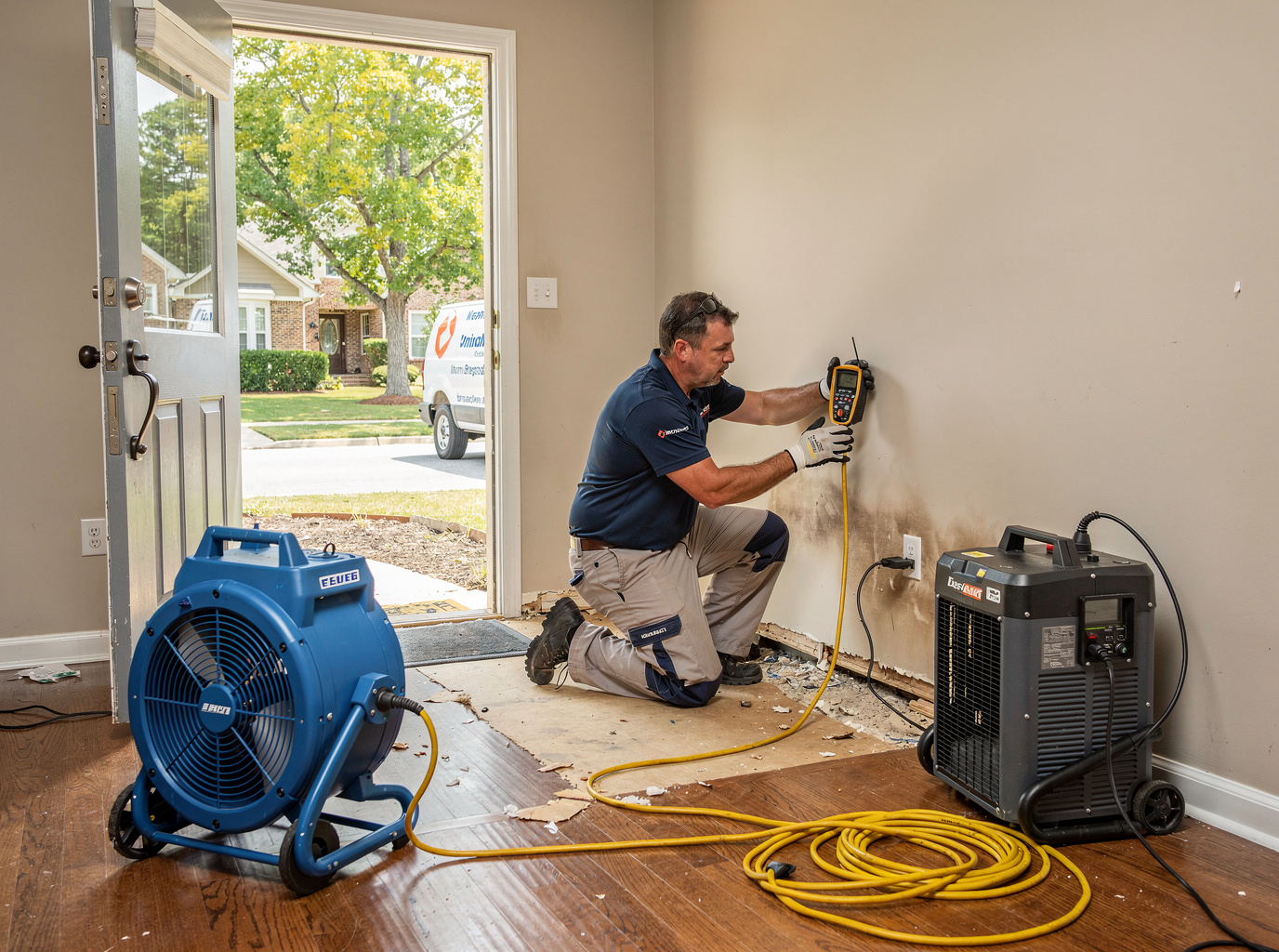
Decatur's humid subtropical climate brings hot summers that speed mold growth in any remaining moisture after a pipe burst or storm. Older homes in Old Decatur and Albany often have crawlspaces and plaster walls that trap water differently than newer construction in Beltline. Technicians set up air movers and dehumidifiers sized for the square footage while checking moisture levels in subfloors and behind baseboards to avoid hidden pockets that later cause musty odors.
Homes near the Tennessee River in Riverbend and around Point Mallard Park sit on soil that holds water longer after heavy rain, so drying times stretch compared to properties on higher ground. We pull baseboards when needed, run industrial equipment for days, and monitor readings daily until levels match pre-loss conditions. This approach prevents warped hardwood floors common in Morgan County historic districts and keeps jobs from turning into full gut-outs.
Nearby cities like Huntsville and Athens see similar calls, but Decatur jobs often involve mixed materials from 1950s-1970s builds where insulation soaks up water and holds humidity. We focus on directing airflow across wet zones without pushing moisture into dry areas, especially in summer when outdoor humidity stays high. Proper drying here means checking attics and wall cavities that many homeowners overlook after initial cleanup.
Technician insight
In Decatur, the thing that catches most people out with water dry out is how quickly summer humidity re-soaks crawlspaces in Old Decatur homes built before central air was common. Homeowners often stop equipment too soon thinking surface floors feel dry, but the soil under the house stays damp and pushes moisture back into joists.
Riverbend Pipe Burst
A homeowner in Riverbend called after a supply line leak soaked the living room subfloor. We found water had wicked into the crawlspace soil and raised humidity under the entire house. Targeted drying with air movers below and dehumidifiers above brought levels down over four days without needing to pull the hardwood.
Water Dry Out Decatur Al Services We Offer
✓Crawlspace Drying
Removes trapped moisture from under homes in Albany and Old Decatur where river humidity lingers and mold risk rises quickly in summer.
✓Basement Dehumidification
Sets up targeted drying in below-grade spaces common in Beltline homes to prevent musty smells and structural swelling.
✓Attic Moisture Removal
Addresses condensation and leak damage in attics of older Morgan County houses before it soaks insulation and ceilings.
✓Hardwood Floor Drying
Uses specialized equipment on cupping floors after water events in Riverbend properties to restore boards without full replacement.
✓Wall Cavity Drying
Extracts hidden water from plaster and drywall in historic homes near the Princess Theatre and Cook Museum of Natural History.
Water Dry Out Decatur Al Cost in Decatur, AL
| Service | Typical Range | What Affects It |
|---|---|---|
| Single room dry out | $400–$800 | Varies with wall access and summer humidity |
| Whole-house drying | $1,200–$2,500 | Common in older Albany and Old Decatur homes |
| Crawlspace drying only | $600–$1,100 | Higher in Riverbend due to soil moisture |
| Equipment rental extension | $150–$300 per day | Added when readings stay high after initial setup |
Ranges are typical for Decatur, AL and confirmed with an exact written quote before any work starts.
How it works
- 1
On-Site Moisture Assessment
Technicians arrive at the Decatur address and use meters to map wet zones in floors, walls, and ceilings.
- 2
Equipment Placement
Air movers, dehumidifiers, and fans are positioned based on home layout and local humidity levels.
- 3
Daily Monitoring
Readings are checked each day until moisture returns to normal ranges for Morgan County homes.
- 4
Final Clearance
Equipment is removed only after all affected materials test dry and secondary damage is prevented.
Pricing
Pricing depends on square footage affected, number of rooms, and how long drying takes in Decatur's humid conditions.